

By Taylor Rice | T Rice Fitness
Most people think health starts with nutrition, hormones, or supplements. Those things absolutely matter. But there's another part of human performance I want you to understand: your nervous system communicates through electrical activity.
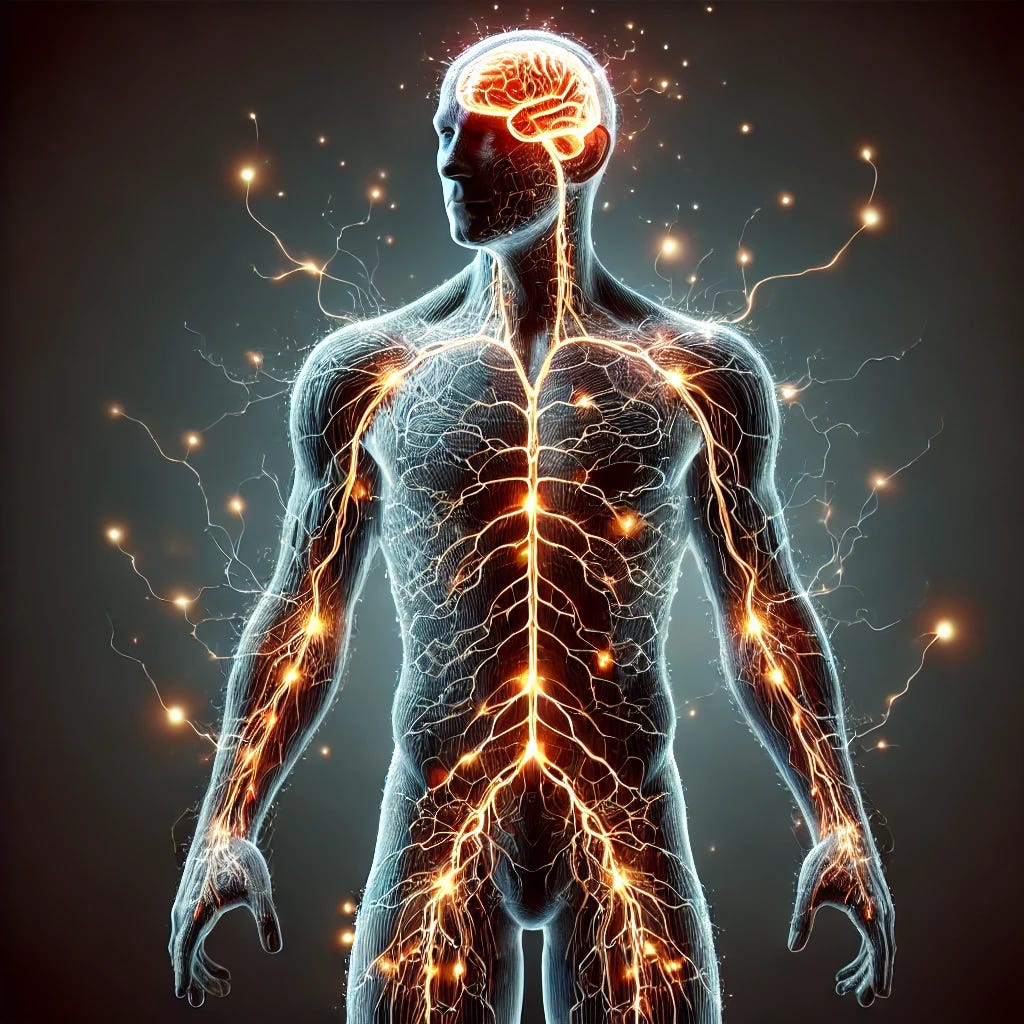
That's why I use a provocative phrase: “The human body is electrical first.” I'm not telling you that chemistry doesn't matter. It does. In fact, the biology of electrical signaling depends on chemistry. I'm challenging you to look beyond the usual conversations about calories, supplements, and sweating, and start thinking about the signals behind movement.
You can train hard and still miss the bigger picture. Before we talk about "recharging" the body, let's understand what the body's electrical signals actually are and what they mean for strength, coordination, and how we move.
Both. Nerve and muscle cells generate electrical changes across their membranes. Those changes depend on the movement of charged particles called ions, including sodium, potassium, and calcium. The processes that maintain these gradients require energy from the body's metabolism.
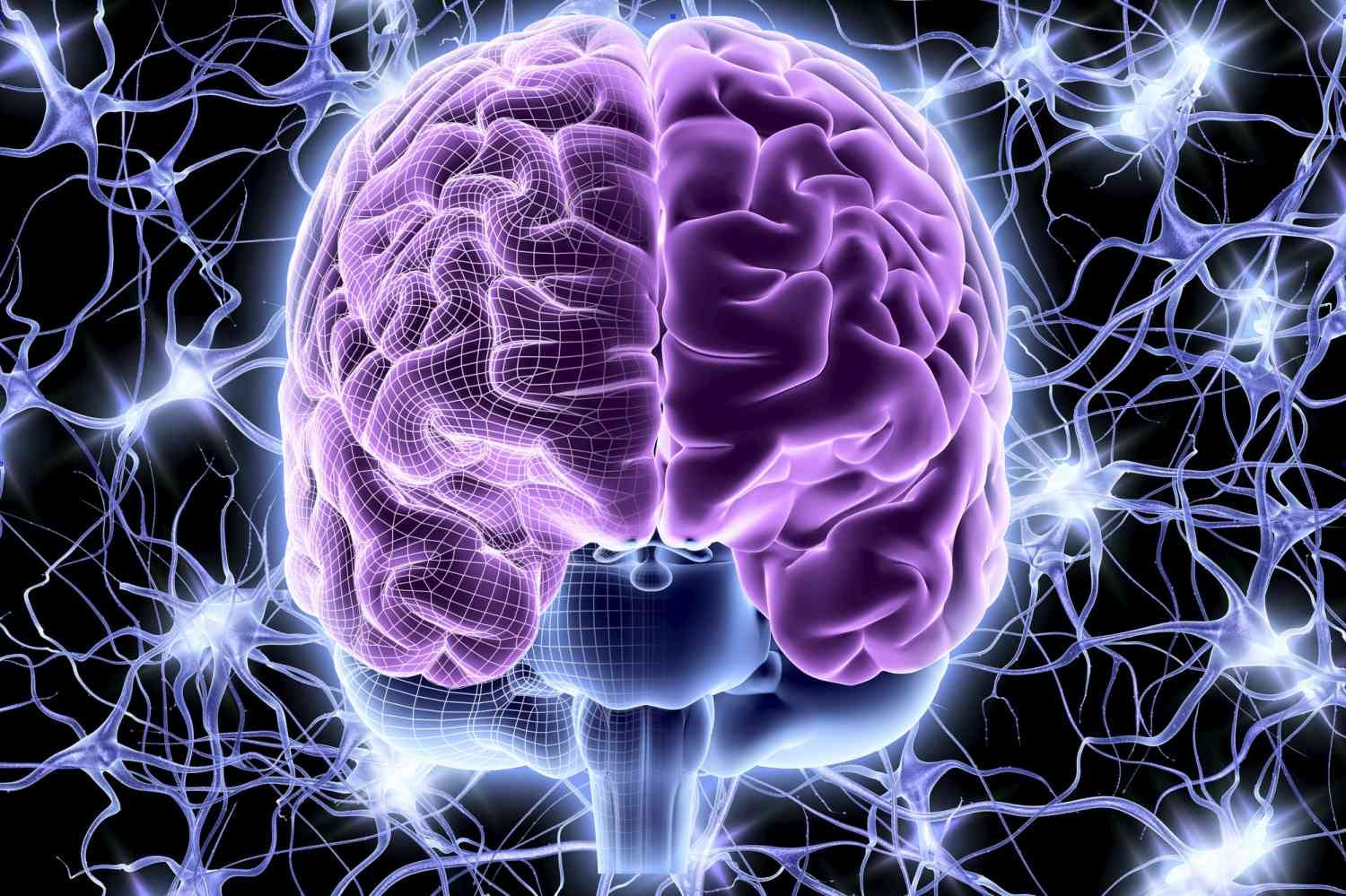
Neurons communicate using electrochemical signals: electrical impulses travel along nerve cells, while chemical messengers called neurotransmitters help pass information between many cells.
That is the scientific foundation behind my metaphor. We're not dealing with a battery that can be topped up by one breathing drill or mineral drink. We're dealing with a living system in which electrical activity, chemistry, energy use, and movement are connected.
And to me, those connections are worth understanding.
Here's the fascinating part. Nerve cells maintain differences in electrical charge across their membranes. When a neuron is activated, channels in the membrane allow ions to move, briefly changing the voltage. That traveling change is called an action potential.
An action potential carries information along a nerve fiber. At many connections between neurons, the arriving signal triggers the release of chemical neurotransmitters that influence the next cell. In other words, electricity and chemistry work together; one is not a substitute for the other.
A nerve impulse is a rapid change in electrical potential that propagates along a neuron. It is one way the nervous system transmits information involved in sensation, movement, and other functions.
Movement involves communication between the nervous system and muscles. A motor neuron sends an action potential toward a muscle, and a chemical messenger at the neuromuscular junction helps trigger electrical activity in the muscle fiber. This contributes to the chain of events that allows the muscle to contract.
That's real physiology, not a metaphor. When I talk about training signal quality, I'm referring more broadly to practicing skill, coordination, and control—not claiming that an exercise directly increases the voltage of your nervous system.
People chasing more energy sometimes cycle through coffee, supplements, intense workouts, and whatever the newest biohack happens to be. I get why. When you feel drained, you want an answer that works.
But I want to challenge the idea that more stimulation is always the solution. Your routine matters. Sleep matters. Nutrition matters. The balance between training and recovery matters.
Here's where my old expression—“You're not tired. You're undercharged”—needs some context. It can be a useful metaphor for asking whether your daily habits support your physical demands, but it is not a medical diagnosis.
Fatigue can have many causes, from insufficient sleep and stress to medications, anemia, thyroid conditions, and other health problems. Persistent or unexplained fatigue deserves appropriate medical evaluation; you cannot establish an electrical malfunction just because you're exhausted.
My coaching question is simpler: Are we paying attention to the inputs we can responsibly improve?
Movement is voltage is another line I use to make people think. Every rep, step, reach, or change of direction involves a conversation between your nervous system, muscles, and the world around you.
Movement is physical, but it's also neurological. Skills are learned. Coordination improves with practice. The nervous system helps organize the timing and activation of muscles during a task.
That doesn't mean a clumsy rep “fries the circuit” or a perfect-looking squat electrically repairs it. It's more practical than that: we can build movement skills, strength, and confidence through appropriately challenging training.
I want you to notice the difference between training with a purpose and chasing exhaustion for its own sake. If you can't control the movement you're asking your body to perform, sometimes the right answer is to adjust the exercise, reduce the demand, or practice the skill before adding intensity.
I'm not against HIIT or hard training. Both can be useful. I am against the idea that a workout is only valuable if it leaves you destroyed.
Motor learning and physical adaptation happen through practice and appropriate progression. The specific results depend on the person, the movement, the amount of training, and recovery. There is no single “electrical recharge” protocol that guarantees better performance.
For more on how I think about physical capacity beyond a single gym session, read Be Fit, Be Ready.

The nervous system contributes to muscle contraction, sensation, movement coordination, and the body's responses to its environment. Some disorders of nerves or muscles really do affect electrical signaling and require specialized diagnosis and treatment.
But that doesn't mean all fatigue, pain, inflammation, digestive symptoms, or hormonal changes are evidence that the body has “lost voltage.” Those conditions have many possible causes, and they should never be reduced to a single explanation from an online article.
If something doesn't feel right, we should ask better questions—not force every symptom into my favorite metaphor. That's how you make the approach more useful instead of less.
Here are some of the ways I encourage people to explore more intentional movement. They're general coaching ideas, not a treatment for a neurological or medical condition.
Choose a manageable movement—a squat, step, carry, or reach—and practice controlling it. Increase the difficulty when your technique and recovery can handle it. Strength and conditioning can be challenging without becoming chaotic.
Practice a few comfortable, unforced breaths, then try a gentle movement. Pay attention to whether you're bracing more than you need to. There's no requirement to use a special breathing count or produce more “voltage” to benefit from movement awareness.
Try standing, walking, and reaching in ways that feel comfortable for you. I like to examine joint positioning and movement options, but posture does not dictate nerve voltage. If you're interested in my posture approach, read Posture Is the Gateway.
Stay appropriately hydrated, eat a balanced diet, and include regular physical activity. For many adults, public-health guidance recommends at least 150 minutes of moderate aerobic activity weekly plus muscle-strengthening activity on two days, with adjustments for individual needs.
Movement, time outdoors, and a consistent sleep routine can all be useful habits. Special water formulations, mineral protocols, and sun exposure are not established ways to “recharge” nerve signaling in otherwise healthy people.
In my work, I also explore the relationship between movement and connected tissues. Fascia participates in mechanical support and force transmission, and that's part of why I'm interested in coordinated movement. It doesn't prove that every physical symptom comes from dehydrated fascia.
Learn how I approach the subject in Know Your Fascia and explore the Tissue Hydration program.
I keep coming back to the operating-system comparison because it helps people understand that movement, perception, and recovery involve connected processes. The nervous system helps coordinate the work. It doesn't run independently from the rest of your biology.
The brain requires energy. Muscles require energy. Ions and chemical signals are essential to electrical activity. No coaching program can guarantee stronger nerves, better digestion, improved hormones, or faster healing by promising to “restore charge.”
But we can teach movement skills. We can design training that fits the person. We can improve our understanding of recovery and how to practice consistently. That's the part I want to take responsibility for.
For more on the bigger picture, read The Nervous System Is the Operating System.
Yes. Nerves and muscles use electrical changes across cell membranes. These changes depend on charged ions, membrane proteins, and metabolic energy, so electrical and chemical processes are deeply linked.
Both. Action potentials are electrical changes along neurons, and chemical neurotransmitters transmit information across many synapses, including the connection between motor nerves and muscles.
Exercise can improve physical fitness and motor skills, but there's no established general fitness metric called “full-body voltage” that normal exercise simply recharges. The analogy shouldn't be confused with clinical tests of nerve or muscle function.
No. Fatigue has many possible explanations, and it cannot be diagnosed as low nerve voltage from symptoms alone. Seek medical advice if fatigue persists or is unexplained.
Practice relevant movements with appropriate progression, adequate recovery, and guidance when needed. Skill learning, strength, and physical activity can all contribute, depending on your goals.
Here's the edge, here's the code: don't confuse intensity with intelligence. Your body is electrically active, chemically powered, mechanically responsive, and far more interconnected than a simple battery metaphor suggests.
That's what I want you to take away from the line “electrical first.” Not that chemistry comes second in a literal biological hierarchy, but that you should understand the signals coordinating the work rather than looking for one more quick fix.
Stop spinning in circles. Practice with intention, build your foundation, and train for the things that matter to you.
Ready to move with more purpose? Explore 1:1 Training at T Rice Fitness.
Be Fit, Be Ready.
— Taylor Rice




Access your optimal performance. Live pain free.