

By Taylor Rice | T Rice Fitness
You read my previous post, The Nervous System Is the Operating System. Now let's go another level deeper. Strength, recovery, movement, performance, and the way you handle stress all involve communication between systems. If you want to improve the output, you have to start paying attention to the input.
This is a piece of the blueprint I use when teaching movement to athletes, executives, and people working on their physical habits after demanding periods of life or training. I call it educating the nervous system. That's my coaching language for developing awareness, practicing useful movement skills, and setting up better daily routines—not a claim that a trainer can cure neurological disease or reset your biology like a computer.
We're going to talk about breathing, posture, daylight, sleep timing, movement, and the mechanical demands you place on your body. Here's the question that starts everything for me: is it high-quality input or low-quality input?
The nervous system responds to information from the body and the environment. The autonomic nervous system helps regulate many functions we don't need to think about every second, including heart rate and aspects of digestion and breathing.
Stress responses are normal; the sympathetic and parasympathetic systems interact throughout daily life. A tough workout, a big presentation, or a competitive game isn't automatically a problem. The issue is whether your habits and recovery support the demands you face.
You can't just decide that your nervous system must be in some perfect state by tomorrow. You can, however, work with practical habits that influence how you feel and function over time.
I often say “preparation is success's best friend.” The daily structure matters. Consistency matters. And none of that requires us to pretend every symptom has one hidden cause.
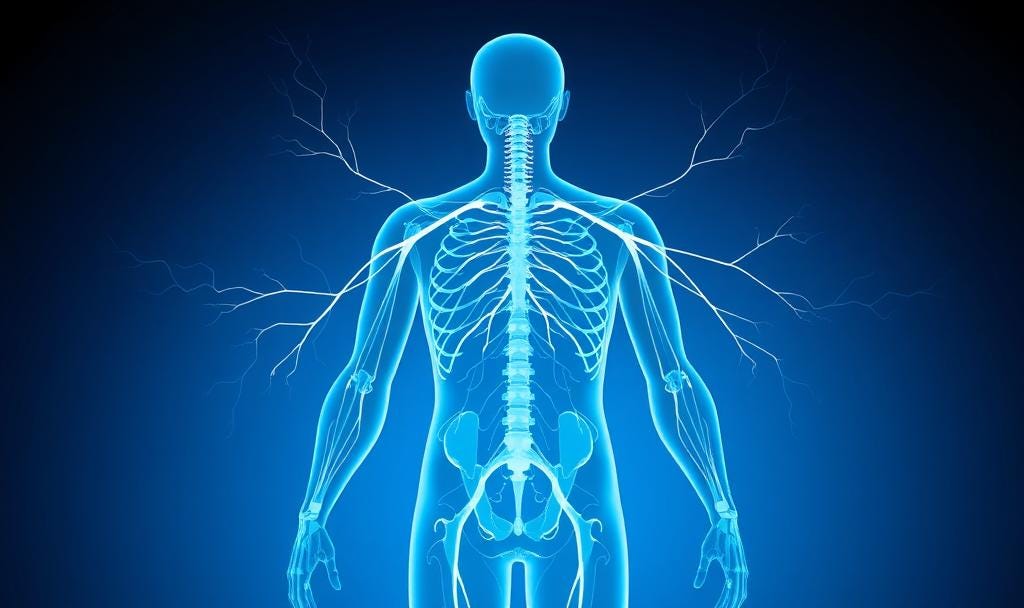
There are two things I ask people to think about before they chase another complicated training hack. One is breathing. The other is how they position and move their bodies throughout the day.
Yes, we breathe automatically. And yes, we spend the day sitting, standing, walking, resting, and changing positions. They go together. When we learn to notice those ordinary processes, we give ourselves a practical starting point.
Your diaphragm plays a major role in breathing. It contracts and moves downward as you inhale; the rib cage and other respiratory muscles also contribute. You don't have to choose between “belly breathing” and “diaphragm breathing” as though they are opposite things. A comfortable breathing pattern involves coordination, not winning a contest to expand your lungs to an imagined 100%.
I like to ask clients: Can you take an easy breath without excessive tension? Does your breathing become rushed during an ordinary task? Can you slow down comfortably when you need a moment to settle?
Slow breathing and other relaxation practices may help manage stress for some people. Research suggests potential benefits for stress and certain measures such as blood pressure, but responses vary. You cannot diagnose oxygen deficiency, “nervous-system danger,” or hormonal imbalance simply by looking at how far someone's rib cage expands.
Try a few relaxed breaths at a comfortable pace. If deep breathing makes you dizzy, distressed, or short of breath, stop and seek appropriate professional advice. And if you have an ongoing breathing problem, get medical attention instead of trying to correct it with a blog routine.

Here's something I've said plenty of times: posture is not just what you see in the mirror. I am interested in how you organize your movement—how your feet, hips, trunk, and shoulders work together as demands change.
But I don't want you walking around frightened of slouching. Normal variation in posture is not a diagnostic sign that the brain is under attack. A neutral stance can be a useful reference for one task without being the only safe way to stand or sit.
I like to explore different positions with clients and ask what feels more comfortable or gives them better control. The goal is options, awareness, and efficient movement—not holding one rigid pose all day.
For a deeper look at this part of the system, read Posture Is the Gateway.

Now let's talk about a powerful environmental input: light. Your body has internal clocks that follow roughly 24-hour rhythms, and the brain's central clock coordinates many of those rhythms with the outside world.
There's a structure in the hypothalamus called the suprachiasmatic nucleus (SCN). I know—it's a mouthful. Think of it as an important part of your biological timing system.
Light received through your eyes helps synchronize that system. Darkness and daytime light patterns are tied to the timing of melatonin and other processes involved in sleep and wakefulness.
That's why I talk about bright days and darker nights. It's simple in principle, but modern routines make it easy to spend the day indoors and then surround ourselves with bright screens late into the night.
Natural daylight during waking hours is a useful environmental cue for the sleep–wake cycle. If you can, spend some time outside during the day, perhaps while taking an easy walk. You don't need to stare at the sun, avoid sunglasses for safety, or expose yourself to excessive ultraviolet radiation to get the point.
How much light, when, and for how long matters differently for different people. Shift workers and people with diagnosed circadian rhythm disorders may need individualized timing strategies rather than generic “morning sunlight” advice.
Bright artificial light close to bedtime can interfere with normal sleep timing in some people. Dimming the environment, setting aside bright screens when practical, and having a consistent wind-down routine are reasonable habits to explore.
My version is simple: “forget the dark days and bright nights; get back into the swing of bright days and dark nights.” You don't need to turn your home into a laboratory—start by paying attention to the difference between day and evening.

Cortisol and melatonin are important hormones with daily patterns. Cortisol participates in many processes, including helping the body prepare to wake; melatonin is closely tied to the timing of sleep.
I sometimes describe these as signals of readiness and rest. But they aren't simple binary regulators that we can manipulate at will. Cortisol is not automatically bad, melatonin is not a magic repair substance, and posture or one breathing session doesn't guarantee a particular hormonal response.
Sleep depends on more than two hormones: your circadian timing, how long you've been awake, health conditions, stress, medicines, habits, and surroundings all matter.
Here's where I think the best “bio-hack” really lives: habits and an environment that support a consistent routine. No magic supplements, no big promises. Just paying attention to the inputs you can reasonably influence.
Let's get back to movement. Pressure is everything is one of my expressions for how physical demands move through the body. The goal isn't to avoid all pressure—our tissues need appropriate loading. The goal is to understand what a movement asks from us and progress intelligently.
Think of choosing a road from point A to point B. If one route is full of unnecessary turns and stops, you might find a more efficient way. With movement, I ask similar questions: Are you bracing more than the task requires? Do you have options if a joint feels restricted? Is your training load realistic?
I talk about neutral pelvis, rib-cage control, shoulder position, and the diaphragm because they are useful coaching reference points. But “alignment = safety = regeneration” is a metaphor, not a medical equation. No single posture has been shown to prevent inflammation or slow every form of tissue degeneration.
Different bodies have different structures, and there's more than one way to perform most everyday movements. Efficiency comes from the right combination of skill, strength, mobility, and load management for the person—not from forcing everybody into identical positions.
“Breath is geometry” is how I get clients to notice the relationship between their trunk, ribs, and breathing. Your position can change the mechanical demands on breathing muscles. Sometimes trying a more comfortable position or loosening unnecessary tension can make breathing feel easier.
That does not mean posture automatically increases lung capacity, activates a special detox system, or regulates cerebrospinal fluid flow. Those are separate physiological questions and shouldn't be presented as proven outcomes of a simple positioning drill.
I also look at how people create and release tension during movement. Sometimes they use too much effort for a simple task; sometimes they need more strength or practice. A useful coaching objective is to give them a wider range of movement choices and better control of those choices.
That's what I mean by efficiency = less effort, more output: use your resources intelligently. It's a training philosophy, not a promise that fatigue or injury will disappear.

Waking up tired. Spending hours doom-scrolling. Feeling tension in your shoulders. Trouble winding down. Brain fog. Mood changes. We've all heard versions of this story, and some people experience several of these things at once.
I want people to get curious about their routines without beating themselves up. What does the day actually look like? Is there room for movement? Are sleep and recovery getting enough attention? Are stress and work demands crowding everything else out?
But here's the important distinction: these symptoms do not prove that a nervous system is “stuck in the wrong gear.” Fatigue, pain, sleep problems, anxiety, and digestive symptoms can have different medical and nonmedical causes. If they are persistent, severe, or worsening, they deserve an appropriate clinical evaluation.
Coaching can help you develop practical habits. It is not a substitute for diagnosis or treatment.
Here's the daily structure I would encourage people to explore. It's a flexible set of habits—not a prescription that every person must follow, and certainly not a guarantee to “fix” the nervous system for good.
Try to spend some time outside during the day when possible. A walk can pair movement with daylight. Protect your eyes and skin appropriately, and don't treat direct sun exposure as a requirement.
Take a short break and slow your breathing if it feels relaxing. Start with an easy rhythm rather than an aggressive breath-holding or fixed inhale/exhale count. Some people find this helpful for stress; others need different approaches.
Break up long periods of sitting. A brief walk after a meal can be a good option. The Movement Is Your Metabolism article explores why ordinary daily activity matters.
Build balanced meals that suit your circumstances. Protein and other nutrients matter, but there is no universal requirement to eat exactly 30 grams of protein within 90 minutes of waking to regulate the nervous system. People with medical or nutritional conditions may need individualized advice.
Stand, sit, and move with options. Take a break when you've been in one position too long. Think of posture awareness as an opportunity to learn, not as a constant test you can fail.
Consider softer lighting, a quieter activity, gentle movement, reading, journaling, or whatever helps you settle. Try to keep a fairly consistent sleep routine. If insomnia persists, seek qualified care—cognitive behavioral therapy for insomnia (CBT-I) is a recommended treatment for chronic insomnia.
Notice the pattern: none of this asks you to spend your whole day “hacking” physiology. The objective is to make sensible actions repeatable.
I know I sound like a broken record, but I keep coming back to this because it matters in coaching: if you want a sustainable result, pay attention to the foundation.
The nervous system is not a broken switch waiting for someone to flick it back on. You are an adaptable human being. Physical training, daily movement, light exposure, sleep, nutrition, and recovery all interact in ways that deserve respect.
We're not trying to chase a perfect state of calm or eliminate every challenge. We're trying to build the ability to handle challenges and recover from them.
Precision. Efficiency. Timing. Consistency. That's the blueprint I want people to remember.
You can support your health through consistent sleep routines, appropriate physical activity, time outdoors, and relaxation strategies that work for you. However, “nervous-system dysregulation” is not a diagnosis you can make from an online checklist. Persistent symptoms should be assessed professionally.
Breathing influences autonomic processes, and slow breathing can affect measures related to heart-rate regulation. That doesn't mean a single breathing technique reliably cures a disorder or produces the same response in everyone.
Light is a major cue for circadian timing. Exposure during the day and less bright light close to bedtime may help support a consistent sleep–wake routine, but optimal timing varies with individual needs.
There isn't good evidence that simply holding a “neutral posture” resets these hormones. They respond to multiple biological and environmental factors.
There is no single scientifically established countdown. People can practice useful habits over time, but improvement depends on the situation and any underlying conditions. A training program should not promise a permanent neurological “reset.”
We started with a simple question: what kind of input is your body receiving? It's a question worth asking about breath, light, movement, pressure, and the way you organize your day.
You can't control every biological process, and you don't need to. You can learn more about movement, develop practical routines, and make changes that you can sustain.
That's what Be Fit, Be Ready means to me. Stop chasing one more trick. Build a foundation that works in real life.
For more on the overall approach, read The Nervous System Is the Operating System. For individual training support, explore 1:1 Training or my Tissue Hydration program.



Access your optimal performance. Live pain free.